
The fierce battles of Galwan, Rezang La, Gurung Hill, and Walong taught the PLA a hard lesson: Fighting the Indian Army would never be easy or inexpensive.

Khandu reiterated that Arunachal Pradesh is an integral part of India and people of the state would never give up their territorial rights.

The answer to Chinese tactics of nibbling territory is not defence of every inch -- a military impossibility -- but instead, nibbling at Chinese territory wherever we are in a stronger position, counsels Colonel Anil A Athale (retd).

'There was a wrong policy of government during the Congress regime. They didn't construct roads up to the border which left a buffer zone of 3-4 km which China occupied. Construction of new villages isn't a new thing, it's all inherited from Congress'
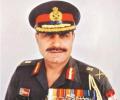
Ajai Shukla salutes the memory of Lieutenant General R M Vohra, Mahavir Chakra, who passes into the ages on Sunday.

'Disengagement is merely the first step in a lengthy process of arriving at a new normal along the LAC in Eastern Ladakh and the entire land boundary.' 'The Indian government should insist on the restoration of the status quo ante in Eastern Ladakh.'

The heightened state of alert was only relaxed after Wang met his Jaishankar in Moscow on Friday on the sidelines of the Shanghai Cooperation Organisation summit, a second source said.

It is on the exact spot where the Guru is said to have created 108 waterfalls, that the Yangtse clash took place between the Indian Army and the Chinese PLA on the night of December 9, 2022. As it had done in Ladakh in May 2020, the PLA tried to change the unmarked LAC in the Yangtse sector in Arunachal Pradesh. It was the most serious border incident since the Galwan Valley clash in June 2020, notes Claude Arpi.

"Even though the first Sino-Indian war took place in 1962, the Chinese incursion had started taking place in 1957. The government knew it but it did not inform the public. After five decades, the same thing is happening as the Chinese incursion has been taking in Aksai Chin for long, but we have woken up now," said Ram Pradhan, former Union home secretary and former governor of Arunachal Pradesh.

Situated at a height of 15,200 feet above sea level, the pass sits on the top of a craggily formed Himalayan range that separates the Tibetan plateau from the Indian sub-continent.
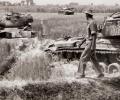
The competition for the worst or most perilous 10 years has always been between the 1960s and the 1980s, points out Shekhar Gupta.

'We would have faced many more Galwans had Indian troops not reacted and retaliated the way they did.'
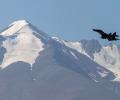
'The border has stayed the way it was for over 30 years, and they are now trying to change it'

China will use airpower to support Pakistan from the start of a war. China will use the opportunity to at least take Ladakh. Its growing navy will prevent India from blockading or attacking the Makran Coast. And thanks to Chinese weapons, Pakistan keeps expanding its forces, observes Ravi Rikhye.

'We have to up our vigil everywhere, all along the LAC -- winter, summer or spring.'

'They will try more rounds of military level talks and move it to the diplomatic and political domain to see if there is a possibility of a solution -- and like the CDS said if that does not happen, we are prepared.'
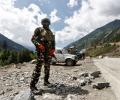
'How Xi Jinping will withdraw the aggression and justify it to his Communist party in case of a negotiated settlement might be his biggest headache.' 'Unless he is ready to gamble on an armed conflict, whose outcome given India's battle-readiness and determination is always uncertain,' observes Virendra Kapoor.

'Neither will China -- at least for now -- because its troops are deployed in equal strength.' 'We are negotiating at equal terms right now and it's a game of patience.'

'Problems will keep recurring unless China vows to resolve all outstanding issues between the two sides,' says Sana Hashmi.
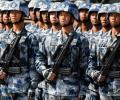
With the Indian Army having blocked the PLA several kilometres inside India, hundreds of soldiers from both sides remain in a tense face-off.
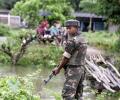
'Our boys are very patriotic.' 'They say Bharat Mata Ki Jai and Jai Hind in front of the Chinese.' 'We have never accepted their claims, we are Indians and proud to be Indians.'
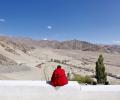
We should have anticipated it on August 5 last year, when we made the big changes in J&K. Amit Shah left nothing to chance when he told Parliament that 'we will bring back Aksai Chin even at the cost of our lives'. 'Then, there were the new maps, objections to the CPEC going through Indian territory, the weather reports.' A broad territorial status quo had existed in Ladakh-Aksai Chin since 1962. India made its intention to change this public, notes Shekhar Gupta.

'The potential of one such LAC engagement going out of control and leading to heavy casualties cannot be ruled out,' warns Lieutenant General Syed Ata Hasnain (retd).

'We are facing the most critical military situation with China in the last 50 years.'

'Does the Indian army's new assertiveness risk a clash escalating into shooting and possibly skirmishes?' asks Ajai Shukla.

'The Chinese forces in the narrow Chumbi Valley are currently in the line of sight and fire of Indian forces poised on the ridges along the Sikkim-Tibet border.' 'Aware of this vulnerability, the Chinese have been eyeing the Doklam plateau,' explains national security expert Nitin A Gokhale.

'India in 2020 is a lot better prepared than in 1962.' 'It is no longer a pushover; and anything other than a crushing Chinese military victory will be a major loss of face for China,' observes Rajeev Srinivasan in the first of a three part column.

'India's military posture has become significantly stronger than China's on the 3,500-kilometre Line of Actual Control.' 'This is enhancing confrontation between the two sides,' points out Ajai Shukla.
 © 2026 Rediff.com - Advertise with us - Disclaimer - Privacy Policy - Sitemap - Feedback - About us - Terms of use - Grievances